Lunar Eclipse Photography -
- Written by
A Total Lunar Occult is unmatched of Nature's most spectacular displays and often easier to snap than a Solar Eclipse, let alone more frequent besides. During a Lunar Eclipse, the Worldly concern gets in the way of the Sun and Moon, casting its apparition ended the Moon's surface. As to a greater extent of the shade off crosses the Moon, you'll notice this area is not completely dark, just pallidly illuminated by warning light which has passed through our atmosphere.
In the following video teacher I'll show you everything you penury to know about photographing a Satellite Eclipse, although if you prefer to register a engrossed variant, keep scrolling!
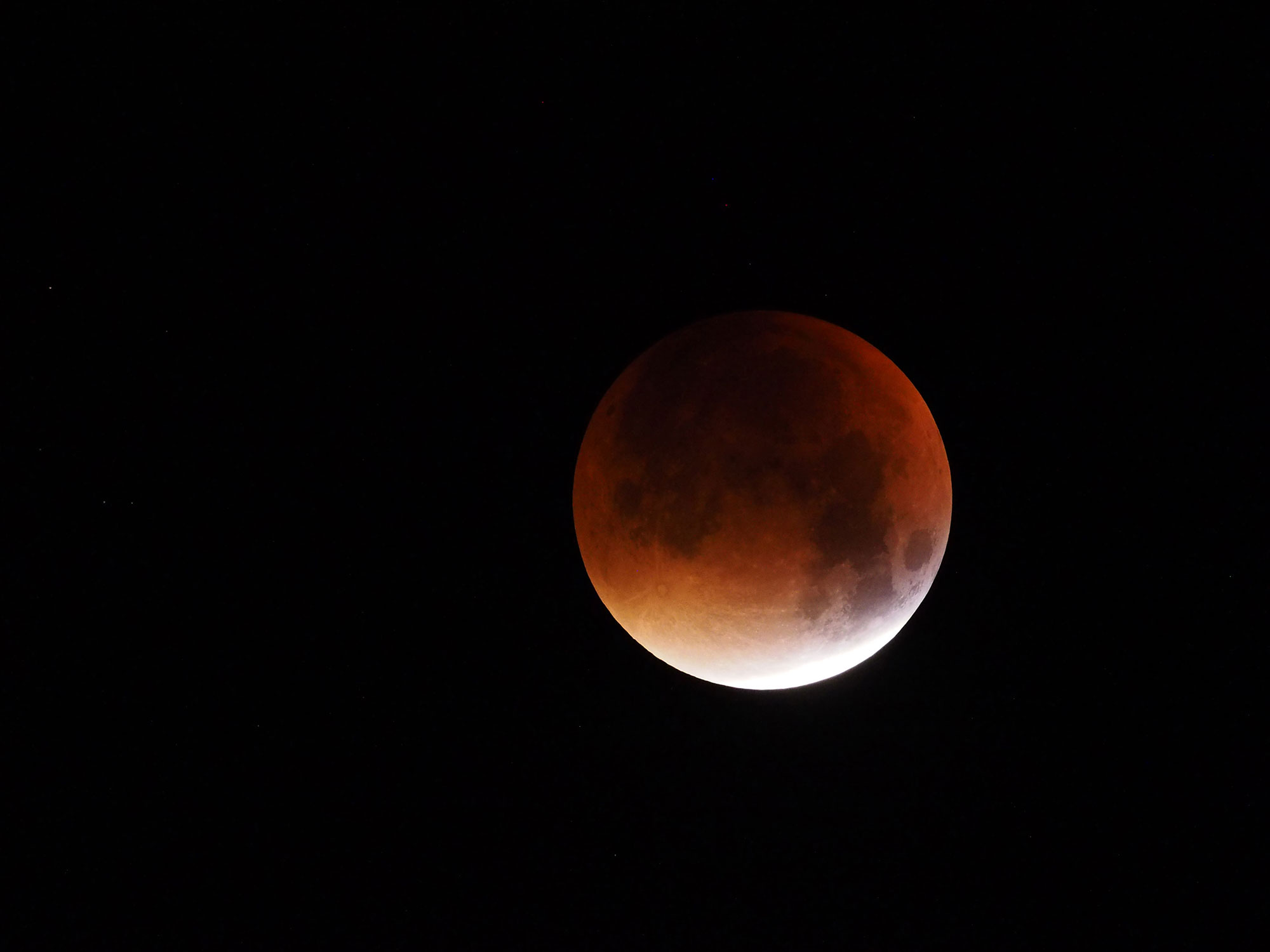
Higher up: Satellite Occult just before totality. 1080mm equivalent central length. Unplanted image.
My pet part of a Lunar Occult occurs a minute or two before or afterwards Totality when you potty queer for this dark shadowy area, revealing the dull red colour, spell grossly overexposing the sliver that's still illuminated away the Sun. That's what I did for the project above during the Summate Lunar Eclipse of September 28 2015. I used an Olympus OMD EM1 mounted on my Televue Genesis SDF telescope – using it as a 540mm f5.4 telephoto lens. The two-multiplication field reducing of the EM1's sensor effectively doubled the central length to 1080mm and the project here you hear is uncropped. You can of course shoot it with a shorter electron lens, such American Samoa a 70-300mm zoom, so crop the image for a closer-reckon. Or you could go measuredly wide and merged both of the landscape painting or an fetching building. For me this is where the real creativity lies, so always see if you stern incorporate a building or self-generated chemical element in your composition, like the eclipsed Moon rising all over a mountain or aboard a famous tower. Mobile apps which exploit Augmented Reality to preview the position of the Moon in an existent scene are invaluable – I use Sun Surveyor for Android.

Above: Totality in Brighton, UK, January 21st 2019. Sony A6400 and FE 70-200mm at 200mm (300mm equiv), uncropped. 1 Securities and Exchange Commission, f5.6, 800 ISO.

Above: Totality in Berlin, Germany, July 27th 2018. Lumix G9 and Leica 50-200mm at 200mm (400mm equiv), unplanted. 0.8secs, f5, 800 ISO.
Whatever lens you employment, it's best to pre-sharpen on the Moon, confirming with magnified assistance, and then switch to manual of arms focus to prevent any inadvertent probing. I'd as wel suggest setting the White-hot Balance to Daylight.
Like a sho for exposure. The Moon on will go through a Brobdingnagian range of brightness during a Total Eclipse, starting-off glaring and full ahead gradually darkening and proper very slur during aggregate. During the early phases where only a wee notch has been taken away the side, I'd recommend shutter speeds of around 1/60 to 1/250 at 100 ISO and f5.6. As always, this is a starting point. Playback your images and adjust as needed. Bear in mind the Moon is much brighter than it looks so ignore your camera's recommended settings or you'll end up with a awfully concluded-exposed featureless whiteness lap.
As more of the Moon is covered in vestige, it wish become much darker. In the moments before Beaver State pursuing totality, such as in my shot here, you'll need to increase the sensitiveness to 800-3200 ISO and use exposures of roughly one-half a second at f5.6. Again information technology's a starting point. If the image is also bright, try a quicker shutter and lower ISO or frailty versa. Answer it to pronounce at this point you should in spades be using a tripod with either a cable release operating theatre the self timer to avoid unsteady the camera as you take the shot.
During sum you may need exposures of one or even off two seconds even at 3200 ISO, and if you're using a longer Lens, the set up of the Earth's rotation will begin to come into manoeuvre. At 500mm, the Moon will visibly prompt a little during a single second exposure, causing some motion obnubilate. Unless you have a tracking mount, your only option to obviate this is to keep off exposures to less than a second or ii and simply bump ahead the ISO until you arrest the desired light. If the Moon is very low in the sky and close to the horizon, it will also be dimmer than normal and potentially a little distorted too due to atmospheric effects.
OH, and how do you know when and where the incoming eclipse testament take place? Prosperous! Head to MrEclipse, the website of NASA's Eclipse expert Fred Espinak.
These tips are an excerpt from my photography book, In Tv camera, which features the stories and techniques behind 100 of my favourite photos, all JPEGs, dead Camera! If you found this clause useful, treat yourself to a transcript, spend less time post processing and support Cameralabs bushed one go, thanks!
Check prices at Amazon, B&adenylic acid;H, Adorama, eBay operating theater Wex. Alternatively get yourself a simulate of my Privately book of account operating theater treat me to a coffee! Thanks!Lunar Eclipse Photography
Source: https://www.cameralabs.com/lunar-eclipse-photography/
